
Our departments
IMKONIYAT (formerly the Uzbekistan Society against Cancer) is one of the country’s first non-governmental non-profit organisations; it gained legal status on 30 September 1993. Each of our departments works under its own approved regulation.
We strive for an inclusive society free from stigma and discrimination, where everyone has the chance of treatment, care and a dignified life. Our work rests on the principles of equality, compassion and solidarity.
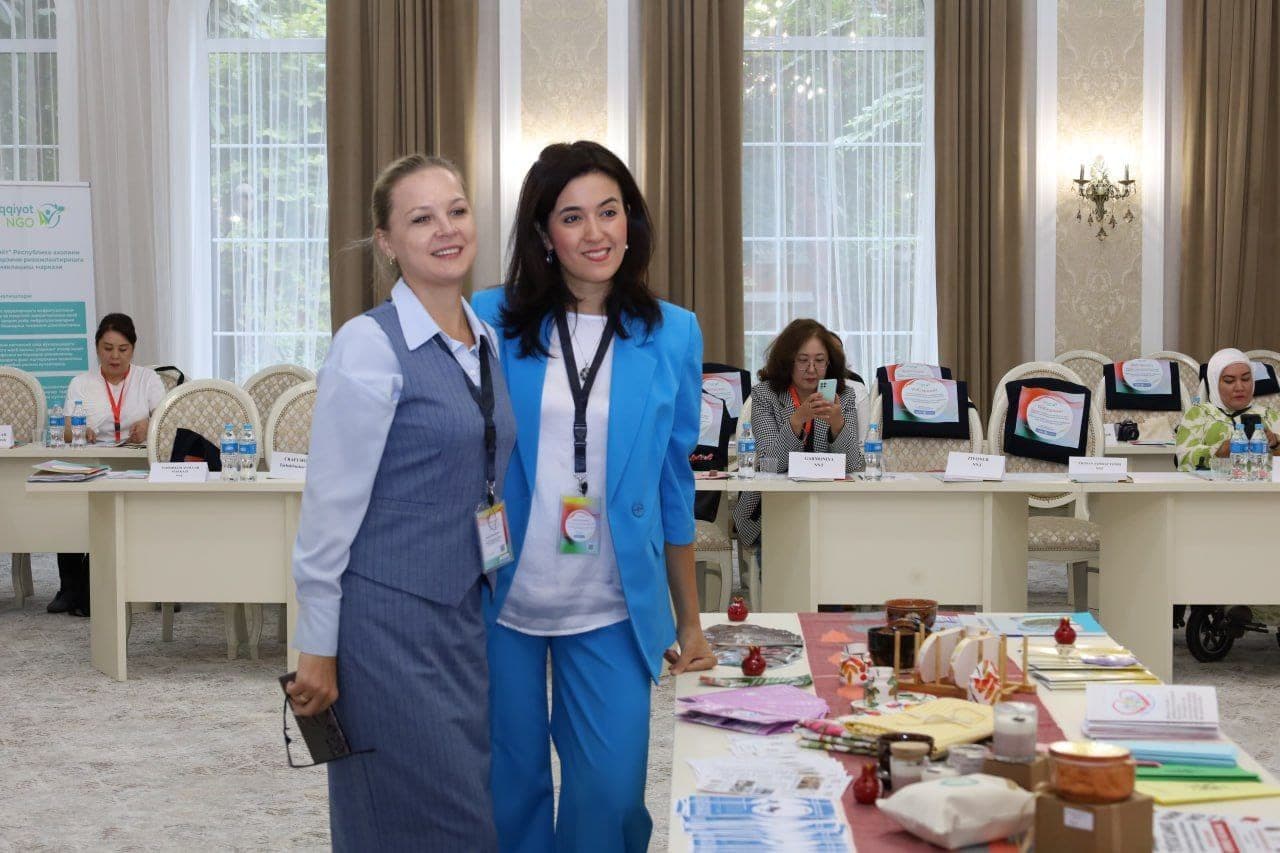
Women’s Department
A dedicated department within the organisation supports women and protects their rights. It:
- develops initiatives to protect the rights of women and girls
- works against gender stigma and discrimination
- provides psychological and social help
The department works under an internal regulation approved in 2019.
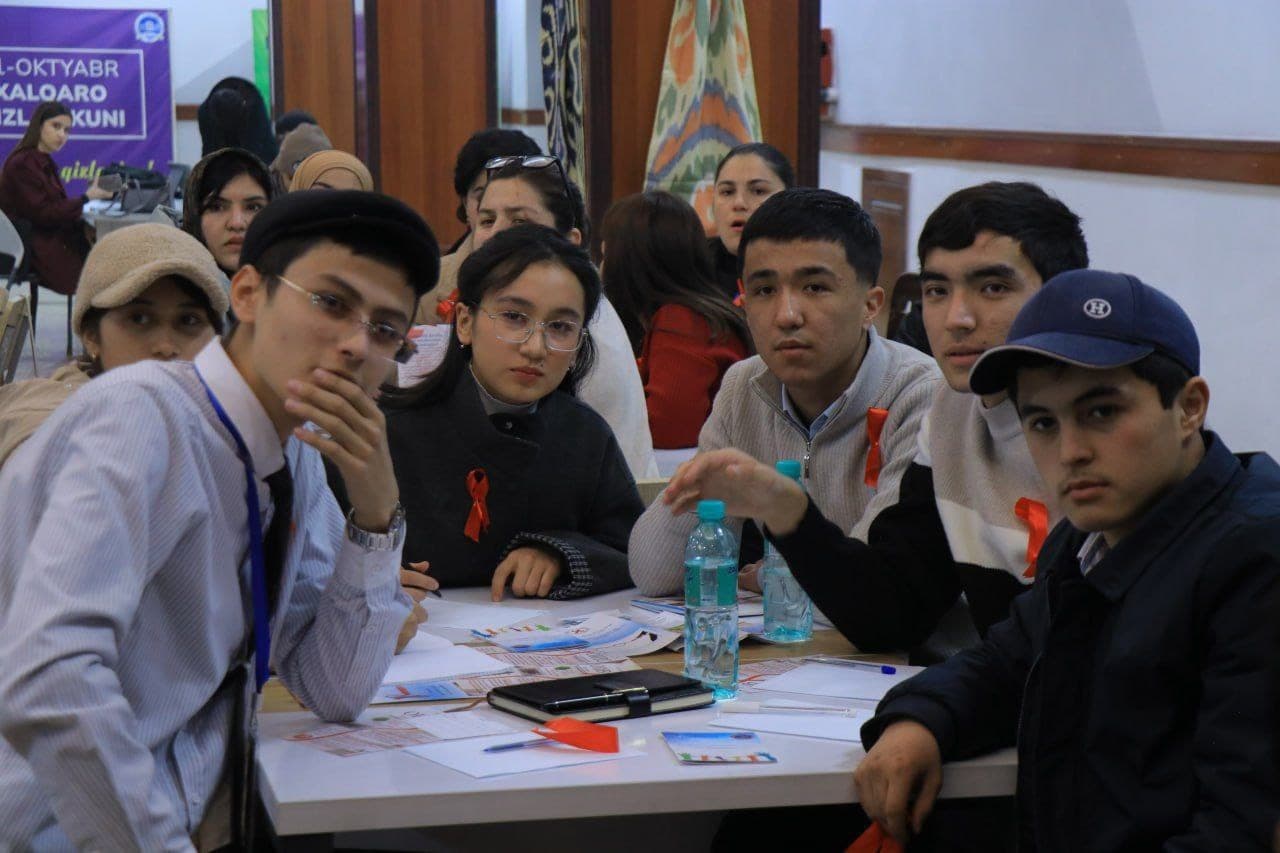
Youth Department
IMKONIYAT works actively with young people, including young people living with HIV. In schools, colleges and health facilities young people often face stigma, a lack of information, self-isolation and discrimination. The organisation aims to raise awareness, build tolerant attitudes and dispel myths about HIV.
To do this it makes wide use of quizzes — a modern, effective way of learning — held both offline and online.
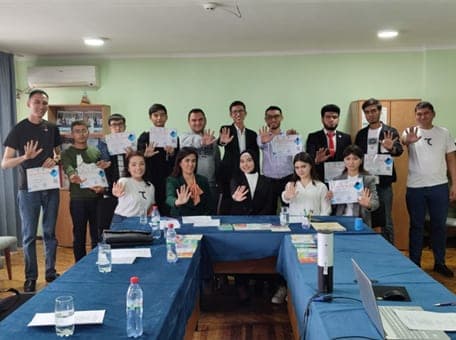
Volunteer Department
In September 2023 the organisation set up a volunteer movement to involve people in socially important initiatives; its work is governed by the Regulation on Volunteer Activity.
Cooperation with the Oltin Qanot movement made joint work possible in protecting the rights of people living with HIV, education and prevention.
Social art (art activism)
One of IMKONIYAT’s newer areas of work is social art (art activism): creative work that raises public awareness of social problems, breaks down stereotypes and advances the idea of inclusion.
Media projects and short videos based on personal stories have been created and published on the organisation’s Instagram, Facebook and Telegram pages. Social art opens a space for dialogue in which difficult subjects can be approached gently, humanely and clearly.
About the organisation
What we do
- sharing reliable, accurate information on HIV/AIDS, tuberculosis, hepatitis, cancer and chronic illness
- raising public awareness of health and prevention
- providing palliative care and social support to people living with HIV
- publishing information and education materials
- training peer consultants
- advancing inclusion and respect for human rights
Cooperation and partnership
We work actively with the Ministry of Health of the Republic of Uzbekistan, the AIDS centres, all regional administrations, the Association of Disabled People and national and international organisations, and have signed cooperation memoranda with state bodies, NGOs and civil society organisations.
Our staff have trained at international centres: in 2003 specialists learnt from a hospice and palliative care centre in Brașov, Romania — a major contribution to developing palliative care locally.
National laboratory diagnostics
IMKONIYAT was the first in Uzbekistan to develop and introduce a domestic test system for HIV antibodies, Peptoskrin-2. This import-substituting innovation was used successfully in AIDS centres across the country from 1991 to 2010 and contributed greatly to the national diagnostic system.
Palliative care and multidisciplinary teams
Since 2011 we have provided palliative care for people living with HIV. Palliative care improves the quality of life of people facing serious illness and of those close to them: relieving suffering and giving psychological, social and spiritual support (WHO definition, 2010).
Fourteen multidisciplinary teams work at AIDS centres across Uzbekistan, each with a coordinator, an infectious-disease physician, a psychologist and peer consultants. They provide medical and psychological help and social support, and run mutual-help groups for adults, adolescents, children and women. Over the course of the programme more than 85,000 people across the country have received palliative care.
International projects and achievements
The organisation’s founder and leader, Ulugbek Valievich Madjidov, was awarded the Shuhrat order in 2018, among those honoured for the 27th anniversary of Uzbekistan’s independence (presidential decree of 29 August 2018), for services to health care and the fight against cancer.
Over the years the organisation has carried out many international projects with support from USAID, the Soros Foundation, Help the Hospices (UK), the International Organization for Migration (IOM), the STOP TB Partnership, ECUO, the Global Fund and other donors and partners.
Main projects
Projects carried out with the support of international donors and partners.
2004
Counterpart International (USAID) and the Soros Foundation — Open Society Institute (USA)
2009
Help the Hospices programme (UK)
2011 to date
Global Fund sub-project: strengthening efforts to reach the 90‑90‑90 and STOP-TB targets in Uzbekistan, with special attention to the most vulnerable
2018
“HIV and TB” (STOP TB Partnership) and “Partnership for equal access to services” (ECUO)
2020
Public oversight of Tashkent’s participatory budget funds (with USAID and the Yuksalish movement)
2021–2023
Global Fund C19RM-2021 sub-project on the 90‑90‑90 and STOP-TB targets
2023–2024
IOM: improving migrants’ and their families’ access to HIV prevention and treatment in Uzbekistan
2025
“Empowering girls and young women living with HIV” — EU Tabassum (Smile)
The project “Media skills for promoting gender equality and supporting young women in Uzbekistan”, run by DW Akademie with the Centre for the Development of Modern Journalism, funded by the European Union and co-funded by Germany’s BMZ.
2025
“HIV epidemic control model — Samarkand region” (ICAP)
In summary
With more than 30 years behind it, IMKONIYAT is recognised in Uzbekistan as a reliable partner, a professional community and a source of change in health and social protection. By developing innovative programmes, introducing modern approaches and strengthening civil society, it works so that everyone can live with dignity, in safety and free from discrimination.