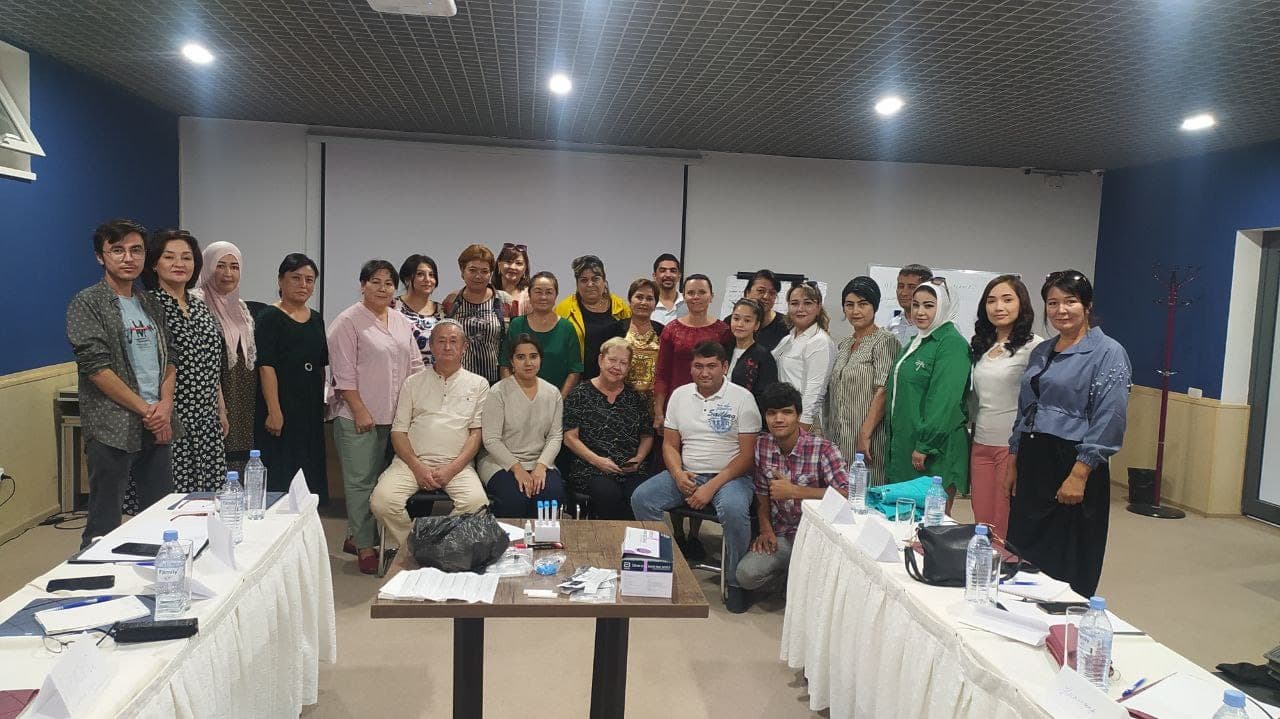
An IMKONIYAT training seminar, 2022 © IMKONIYAT
Palliative care is an approach that improves the quality of life of patients and their families facing the problems of a life-threatening illness, through the prevention and relief of suffering by early identification, careful assessment and treatment of pain and other physical symptoms, and psychosocial and spiritual support. (WHO, 2010)
How we came to this work
Our staff trained in palliative care for people living with HIV at the Hospice and Palliative Care Centre in Brașov, Romania. In 2011, in the first Global Fund project, all of our teams’ infectious-disease physicians were trained in palliative care and antiretroviral therapy under Professor O. N. Leonova, and together with her we prepared the country’s first methodological recommendations on palliative care for people living with HIV.
Our specialists later developed standards and regulations for palliative care and a training module for preparing and upskilling specialists.
What the care includes
- Medical follow-up and consultations
- Psychological support for the patient and family, including through bereavement
- Social support and accompaniment
- Home visits to people who cannot come to the AIDS centre themselves
- Humanitarian aid for those most in need, when resources allow
When resources allow, we provide those most in need with symptomatic-therapy medicines, vitamins and care products. Over the whole period of our work this humanitarian aid has exceeded 19 billion soums. For us it is not a stand-alone measure but part of the support: it helps keep contact with a person and preserve their quality of life.
The association’s charter sets the aim of promoting state-level palliative care programmes for people with HIV, tuberculosis, hepatitis and cancer.