Overview of activity in 2026
During the 2026 reporting period, IMKONIYAT worked systematically on HIV and other infectious disease prevention, services for vulnerable and disadvantaged groups, medical, psychological and social support for people living with HIV, healthy lifestyles among young people, and reducing stigma and discrimination.
An important aspect was strengthening cooperation with the public healthcare system, AIDS centres, mahallas, educational institutions, other NGOs, international organisations and civil society bodies.
Activities included information and education events, HIV testing referrals, psychological and legal assistance, outreach counselling and coordination with partner organisations.
HIV prevention, testing access, self-testing, index testing, ART adherence, re-engagement with medical follow-up and psychosocial support were further developed.
Alongside effective implementation of donor-supported projects, particular attention was given to internal capacity, service quality and sustainable cooperation mechanisms.
Main projects implemented in 2026
2.1. Samarkand HIV Epidemic Control Model (SOMEC)
Project title: “Samarkand HIV Epidemic Control Model (SOMEC)”.
In 2026, with financial support from ICAP, IMKONIYAT implemented SOMEC to expand HIV prevention and access to services in Samarkand region.
Integrated activities expanded access to high-quality prevention, rapid testing, counselling and medical assistance, particularly for people living with HIV and their sexual and injecting partners.
Main areas of activity:
- HIV prevention information and education;
- HIV testing referrals;
- outreach counselling and client follow-up;
- referrals for psychological and legal assistance;
- promoting self-testing;
- developing index testing;
- returning people living with HIV to medical follow-up;
- supporting ART adherence;
- reducing stigma and discrimination;
- strengthening cooperation between public healthcare institutions and NGOs.
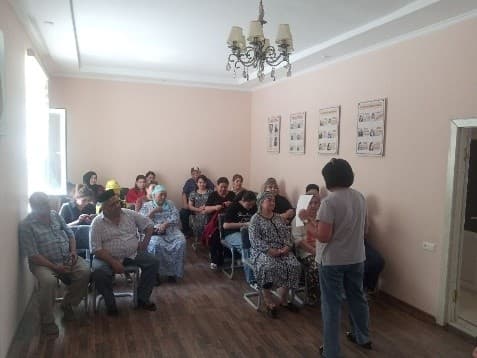
In the first quarter, information and education events were held in Tayloq and Jomboy districts and Samarkand city for residents, mahalla activists and students. They addressed HIV transmission, prevention, early testing, self-testing and reducing stigma and discrimination. More than 90 people participated.
From January to August 2026, 263 new clients were reached; 89 were tested for HIV, with 21 positive results. More than 1 027 services were provided; 8 clients returned to medical follow-up and restarted ART. 37 self-testing kits were distributed; 2 clients decided to start pre-exposure prophylaxis (PrEP). Index testing, family counselling and anonymous partner notification services were also provided.
On 3–4 June 2026, specialists attended an ICAP-organised SOMEC implementers’ working meeting in Samarkand. Topics included improving HIV testing, index testing, re-engaging clients in treatment, reducing stigma and discrimination, motivational counselling and person-centred approaches.
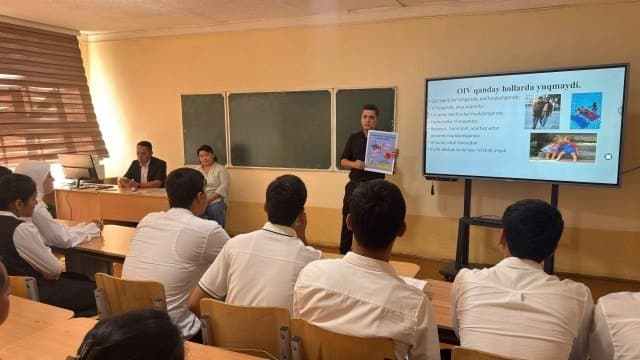
An information and education session under the SOMEC project. Samarkand region, 2026. © IMKONIYAT 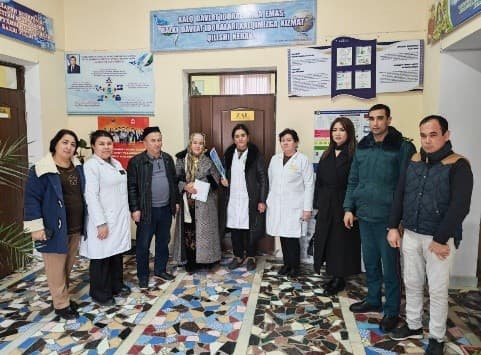
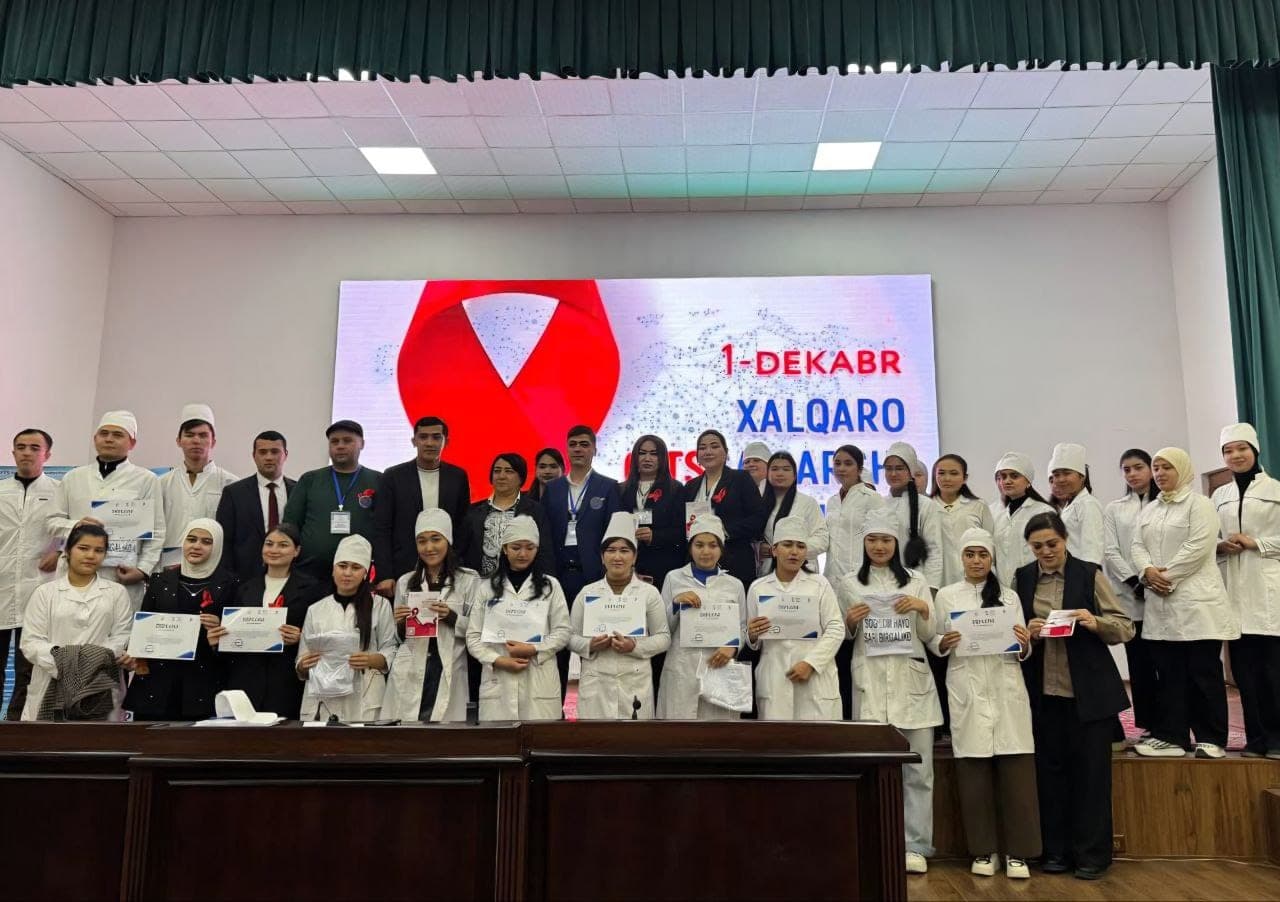
An official group photograph at an institution · 2026 report. © IMKONIYAT
A speaker and audience at an information session · 2026 report. © IMKONIYAT 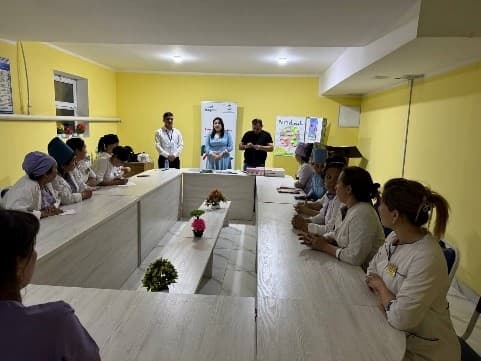
Participants around tables at an information meeting · 2026 report. © IMKONIYAT
2.2. Global Fund to Fight AIDS, Tuberculosis and Malaria project
Title: “Achieving the 90‑90‑90 targets and strengthening STOP-TB activities in the Republic of Uzbekistan, with particular attention to vulnerable populations”.
The project is an important area of integrated support for people living with HIV, vulnerable groups and people facing barriers to medical and social services.
The main focus was on:
- engaging people living with HIV in medical follow-up;
- starting ART and adhering to treatment;
- identifying and re-engaging clients who had interrupted treatment;
- psychological and social assistance;
- referrals and accompaniment to healthcare institutions;
- awareness of HIV and tuberculosis prevention;
- reducing stigma and discrimination;
- targeted work with vulnerable groups.
Activities brought services closer to disadvantaged groups, helped prevent disengagement from healthcare and strengthened people living with HIV’s participation in treatment.
Mobile multidisciplinary teams (MDK)
Mobile multidisciplinary team (MDK) activities were implemented as an important, distinct area of IMKONIYAT’s integrated service system.
MDK specialists worked together to provide medical, psychological and social assistance, refer clients to healthcare institutions, support ART adherence and re-engage clients who had lost contact with medical follow-up.
The main MDK tasks were:
- improving quality of life for people living with HIV;
- medical and psychosocial assistance;
- building and strengthening ART adherence;
- finding and re-engaging clients lost to medical follow-up;
- services at clients’ locations when health prevents them from attending an AIDS centre;
- accompaniment to healthcare institutions and tuberculosis services;
- distributing information and educational materials;
- documentation, monitoring and reporting;
- team discussion of complex cases;
- developing specialists’ professional capacity.
From January to September 2026, MDK recorded 8 741 service visits, including 4 526 primary clients. They provided 2 206 medical and 2 019 psychological services and 6 638 ART adherence consultations.
In addition:
- 496 people living with HIV entered medical follow-up;
- 731 people started ART for the first time;
- 800 people restarted ART;
- 152 mutual-support group sessions were organised;
- 980 people living with HIV participated in groups;
- 1 274 psychosocial assistance services were provided to relatives and family members;
- 132 accompaniment services to healthcare institutions were provided.
The MDK system focused on bringing services directly to clients, combining medical, psychological and social assistance, and ensuring service continuity.
This approach helped people return to medical follow-up, start or restart ART, adhere to treatment and access necessary social services.
2.4. Achieving lasting changes in young people’s tolerance towards people living with HIV through quizzes
Title: “Achieving lasting changes in young people’s tolerance towards people living with HIV through quizzes”.
The project shared accurate HIV information among young people in Tashkent region, reduced stigma and discrimination, and developed tolerant attitudes towards people living with HIV.
Interactive quizzes offered questions and answers on HIV transmission, prevention, misconceptions, stigma and discrimination, the rights of people living with HIV, and tolerance.
In 2026, 16 quiz events were organised instead of the planned 15. They covered Chirchiq, Angren, Bo‘ka, Nurafshon, Piskent, O‘rta Chirchiq, Yuqori Chirchiq, Parkent, Zangiota, Qibray, Tashkent district, Bo‘stonliq, Yangiyo‘l, Bekobod, Ohangaron and Chinoz.
Total participation: 446 young people.
Alongside HIV knowledge, events addressed human rights, communication, tolerance and non-discriminatory relationships.
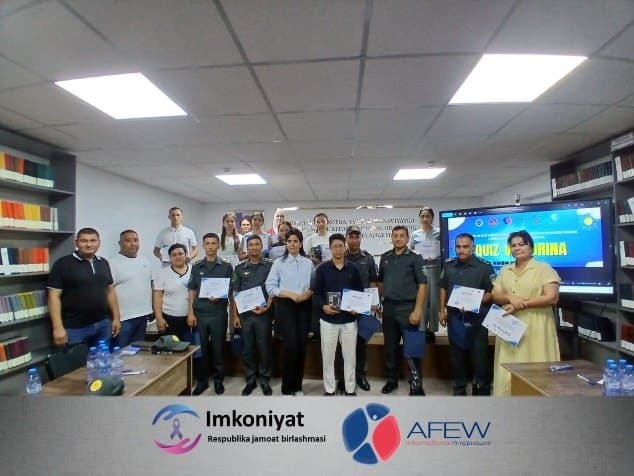
A quiz in IMKONIYAT’s youth project supported by AFEW International. Tashkent region, 2026. © IMKONIYAT 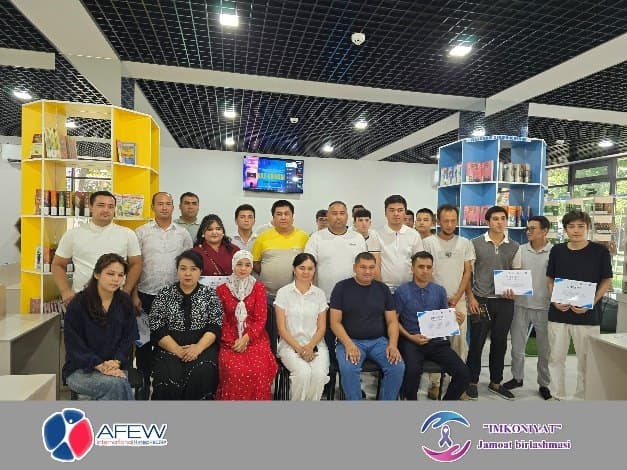
A quiz in IMKONIYAT’s youth project supported by AFEW International. Tashkent region, 2026. © IMKONIYAT
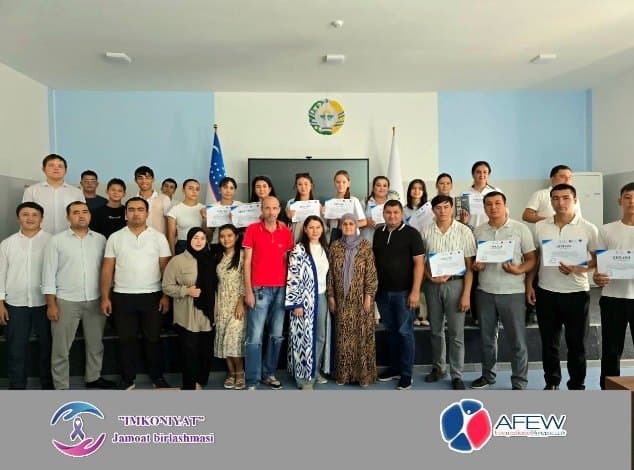
A quiz in IMKONIYAT’s youth project supported by AFEW International. Tashkent region, 2026. © IMKONIYAT 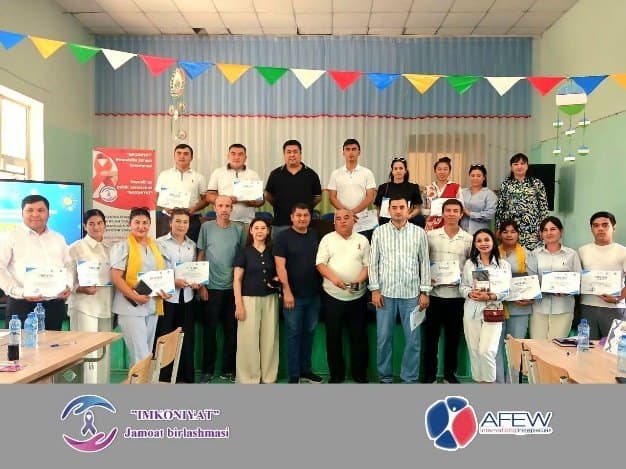
A quiz in IMKONIYAT’s youth project supported by AFEW International. Tashkent region, 2026. © IMKONIYAT
2.5. Information and education for the public and young people
In 2026, regional branches organised public, youth and student events promoting healthy lifestyles, reliable information on HIV and other infectious disease prevention, the importance of early testing, and reducing disease-related misconceptions and stereotypes.
On 16 March 2026, an educational meeting on “HIV prevention and transmission routes” was held for 17 students at specialised vocational technical college No. 1 in Uzbekistan district, Fergana region. It aimed to inform young people about prevention, HIV transmission and responsibility for their health. A specialist gave detailed answers to students’ questions.
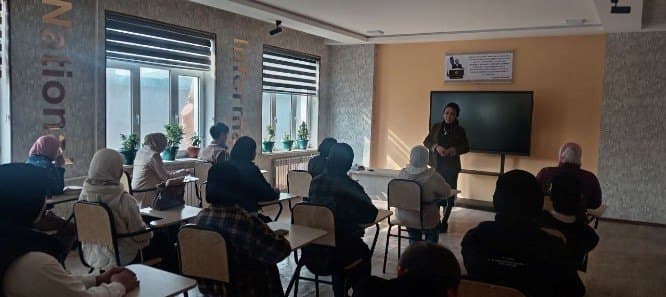
The meeting “HIV prevention and routes of transmission” at Technical College No. 1, Uzbekistan district, Fergana region, 16 March 2026. © IMKONIYAT 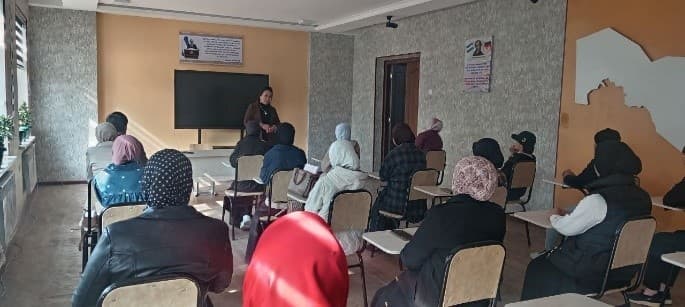
The audience at a technical-college education meeting · 2026 report. © IMKONIYAT
On 27 March 2026, an information campaign with students was organised at Asia International University in Khorezm region. It expanded reliable knowledge about HIV, hepatitis B and C and syphilis, encouraged prevention and responsible attitudes towards health. Videos also presented these topics. Participants learned about anonymous, free testing opportunities.
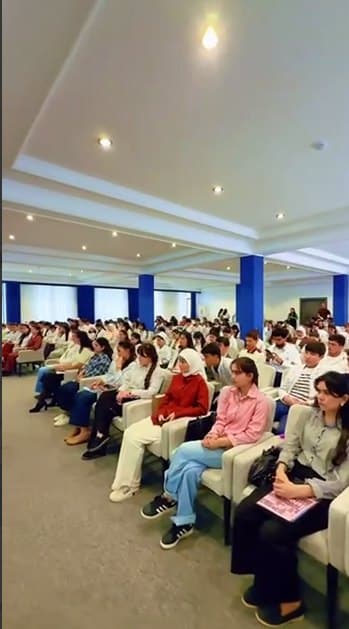
An information campaign for students of Asia International University, Khorezm region, 27 March 2026. © IMKONIYAT 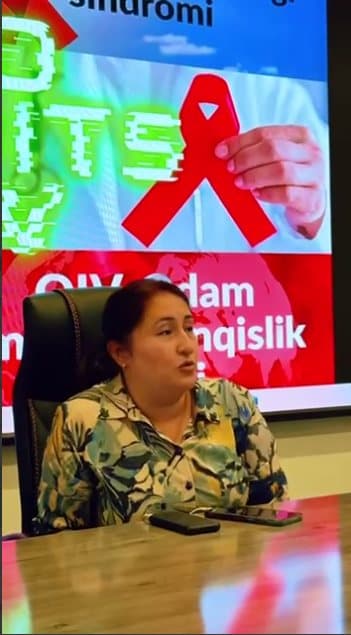
Education event at Asia International University · Khorezm, 27 March 2026 © IMKONIYAT
During the 2026 reporting period, a round table on HIV prevention in Navoi region involved 50 participants, including gynaecologists, dentists and IMKONIYAT staff. It raised awareness, addressed misconceptions and promoted healthy lifestyles. Discussion covered early signs of HIV infection, mother-to-child transmission, quality and length of life, the importance of ART and common myths about HIV transmission through saliva.
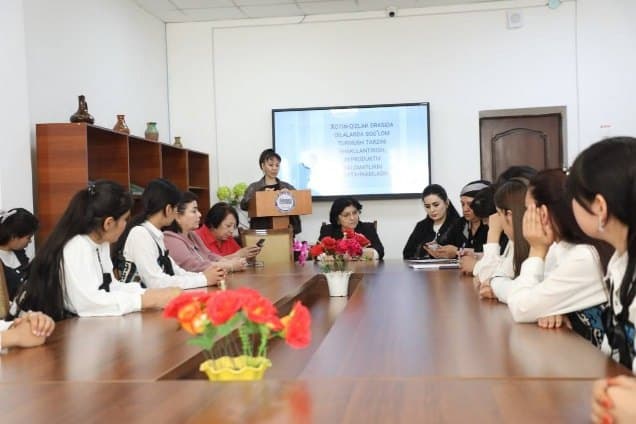
A round table on HIV prevention, Navoi region, 2026. © IMKONIYAT 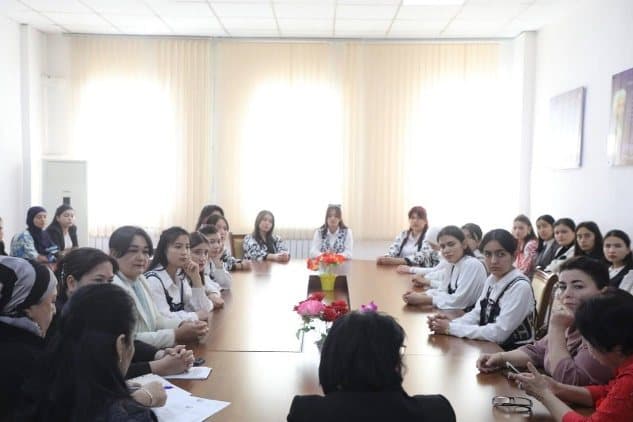
HIV prevention round table · Navoi, 2026 © IMKONIYAT
On 3 June 2026, HIV prevention education took place during a Youth Day event at Lokomotiv park in Khorezm region. Regional AIDS Centre healthcare workers and an IMKONIYAT specialist in Khorezm participated. The aim was to raise young people’s awareness, promote healthy lifestyles and encourage responsibility for their health.
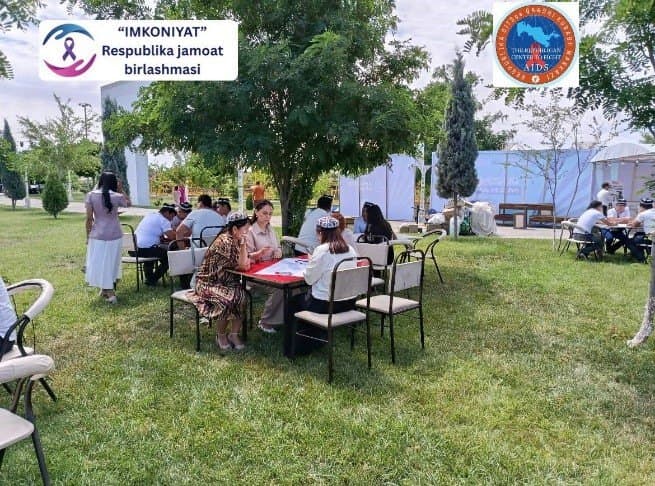
Youth Day in Lokomotiv park, Khorezm region, 3 June 2026. © IMKONIYAT 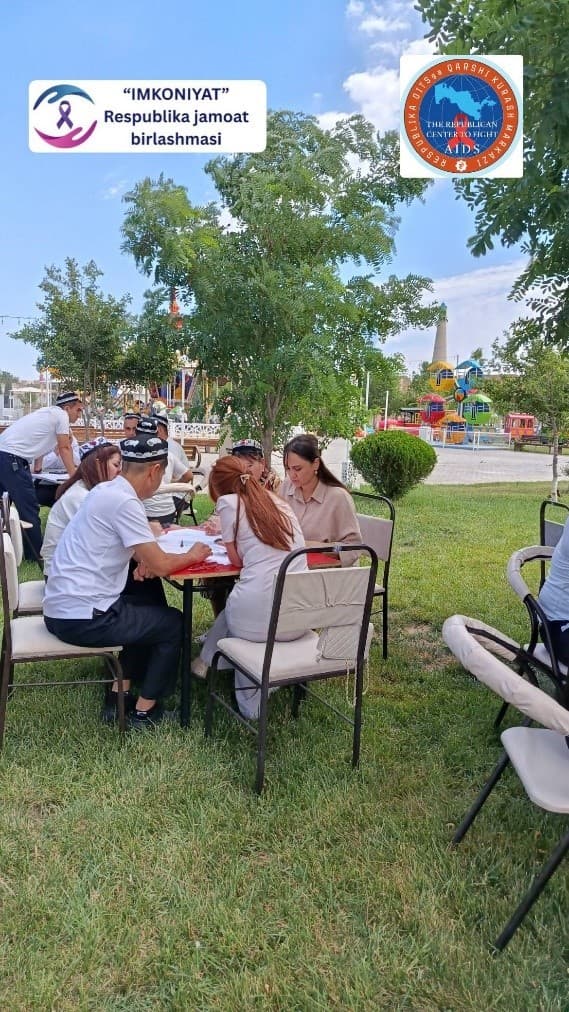
Information stands at Youth Day in a park · 2026 report. © IMKONIYAT
The event included prevention discussions, specialists’ answers to young people’s questions and distribution of information materials. Motivational activities encouraged career choices and education; psychological tests, quizzes and interactive information-sharing games were also organised.
Overall, the information and education events held in Fergana, Khorezm and Navoi regions in 2026 focused on expanding reliable knowledge among young people and the general public about HIV, its prevention and transmission routes, raising awareness of opportunities for early testing, promoting healthy lifestyles and reducing HIV-related misconceptions and stereotypes. Organising the events as open dialogues enabled participants to put their questions directly to specialists and receive practical advice.
Main results and social impact
The results of January–September 2026 can be grouped into the following areas:
3.1. Expanding service access
Activities helped expand medical, psychological and social service access for people living with HIV and vulnerable groups.
3.2. Returning to treatment and supporting ART adherence
Client outreach, motivational counselling, psychological assistance and accompaniment to healthcare institutions supported re-engagement with medical follow-up for people who had interrupted treatment.
In SOMEC’s second quarter, 8 clients returned to medical follow-up and restarted ART.
3.3. Psychological and social support
Psychological and social assistance alongside medical services expanded clients’ opportunities to receive integrated support.
Mutual-support groups enabled communication, experience sharing and psychological support among people living with HIV.
3.4. Reducing stigma and discrimination
In 2026, reducing stigma and discrimination towards people living with HIV was a cross-cutting focus across all main projects.
An internal policy addressed preventing stigma and discrimination and ensuring equal service access. It covered equal access, confidentiality, non-discrimination, person-centred services and protection of clients’ rights.
3.5. Work with young people
The quiz project engaged hundreds of young people in interactive learning about HIV prevention, stigma, discrimination, human rights and tolerance.
This work aimed to involve young people as active participants in open dialogue and the development of social relationships, as well as recipients of information.
Strategic cooperation in 2026
In 2026, the organisation developed cooperation with government bodies, healthcare institutions, AIDS centres, international organisations, NGOs, educational institutions and civil society bodies.
4.1. SOMEC round table · 29 July 2026
4.1. Samarkand round table — 29 July 2026. IMKONIYAT and the Samarkand regional division of Uzbekistan’s National Association of NGOs organised a round table within ICAP’s SOMEC project. Government, healthcare and NGO representatives discussed HIV prevention, reducing stigma and discrimination, and encouraging testing. The capabilities of TellYourPartner.uz and HIVTest.uz were presented. Participants agreed to strengthen cooperation on HIV prevention.
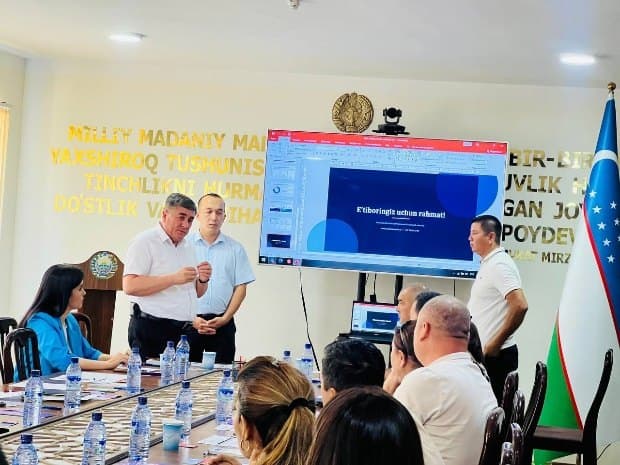
Round table under the SOMEC project, Samarkand, 29 July 2026. © IMKONIYAT 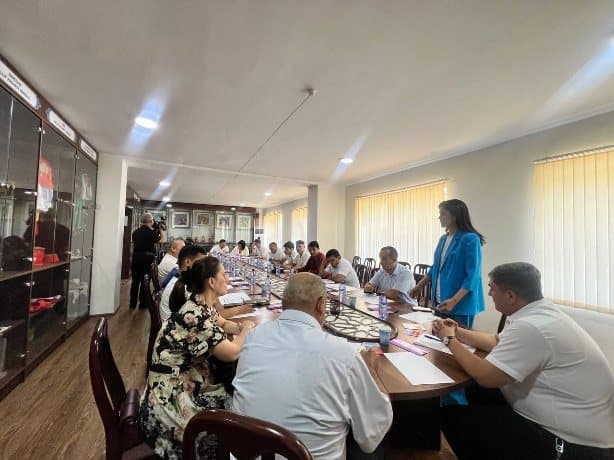
SOMEC round table · Samarkand, 29 July 2026 © IMKONIYAT
4.2. Public hearing · 25 August 2026
4.2. Public hearing — 25 August 2026. A hearing at the Tashkent Region Health Department addressed improving healthcare quality and accessibility with government, NGO and media representatives. IMKONIYAT’s Tashkent Region branch participated actively, presenting its 2025–2026 activities and results with donors and partners. Proposals addressed developing palliative care and expanding access. Cooperation between government, civil society and donors was highlighted as an important factor in meeting public needs.
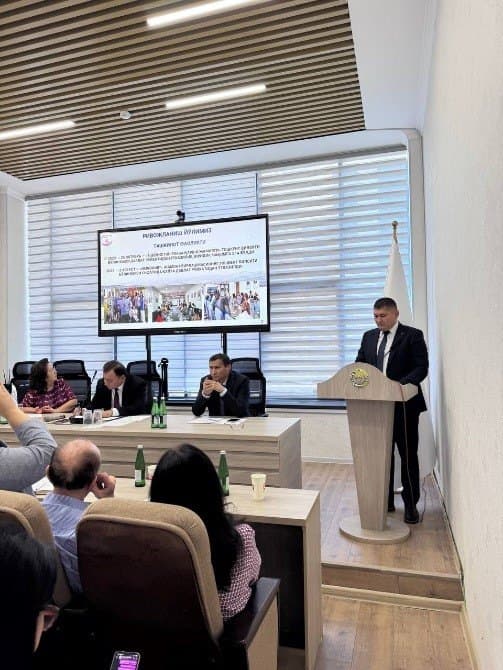
Public hearing on the quality and availability of medical services, Tashkent Region Health Department, 25 August 2026. © IMKONIYAT 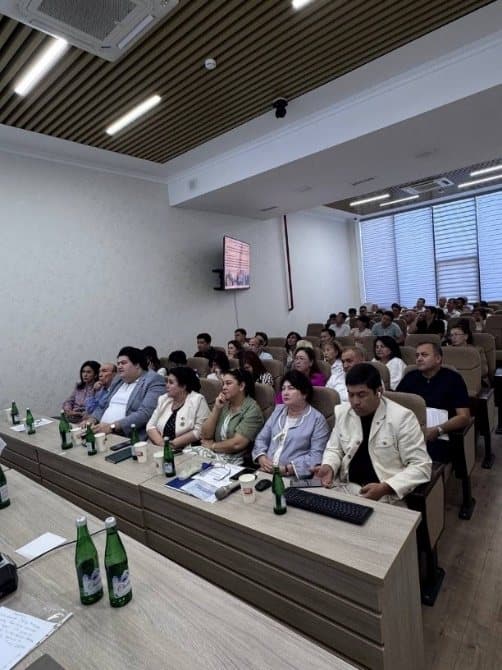
Public hearing · Tashkent region, 25 August 2026 © IMKONIYAT
4.3. Cooperation with the Ecological Party of Uzbekistan
On 28 September 2026, IMKONIYAT met with the Executive Committee of the Central Council of the Ecological Party of Uzbekistan.
Discussion covered expanding cooperation in Karakalpakstan, the regions and Tashkent, promoting healthy lifestyles among the public and young people, disease prevention, awareness of HIV/AIDS, tuberculosis and cancer, and preventing stigma and discrimination.
Agreements were reached on joint environmental and social events, educational campaigns and practical regional projects.
This cooperation creates new opportunities in healthcare, environmental awareness and public participation.
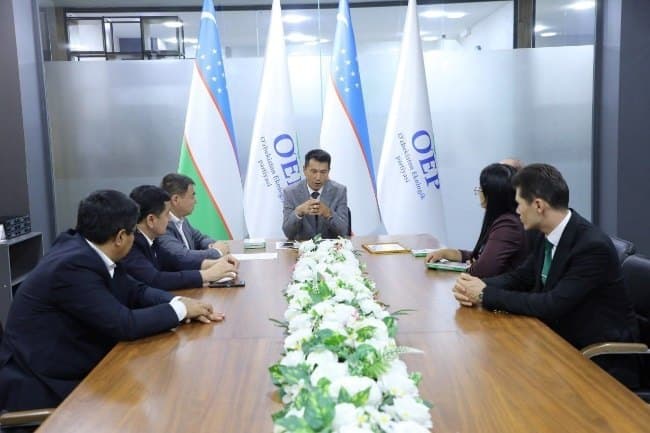
Meeting with the Executive Committee of the Central Council of the Ecological Party of Uzbekistan, 28 September 2026. © IMKONIYAT 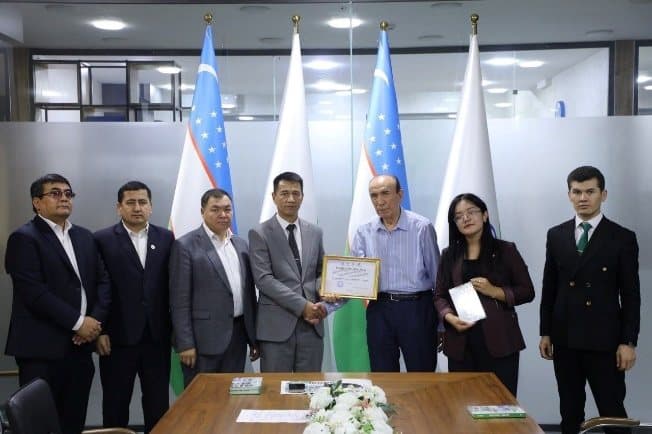
Meeting with the Ecological Party of Uzbekistan · 28 September 2026 © IMKONIYAT
4.4. IMKONIYAT — 33 years
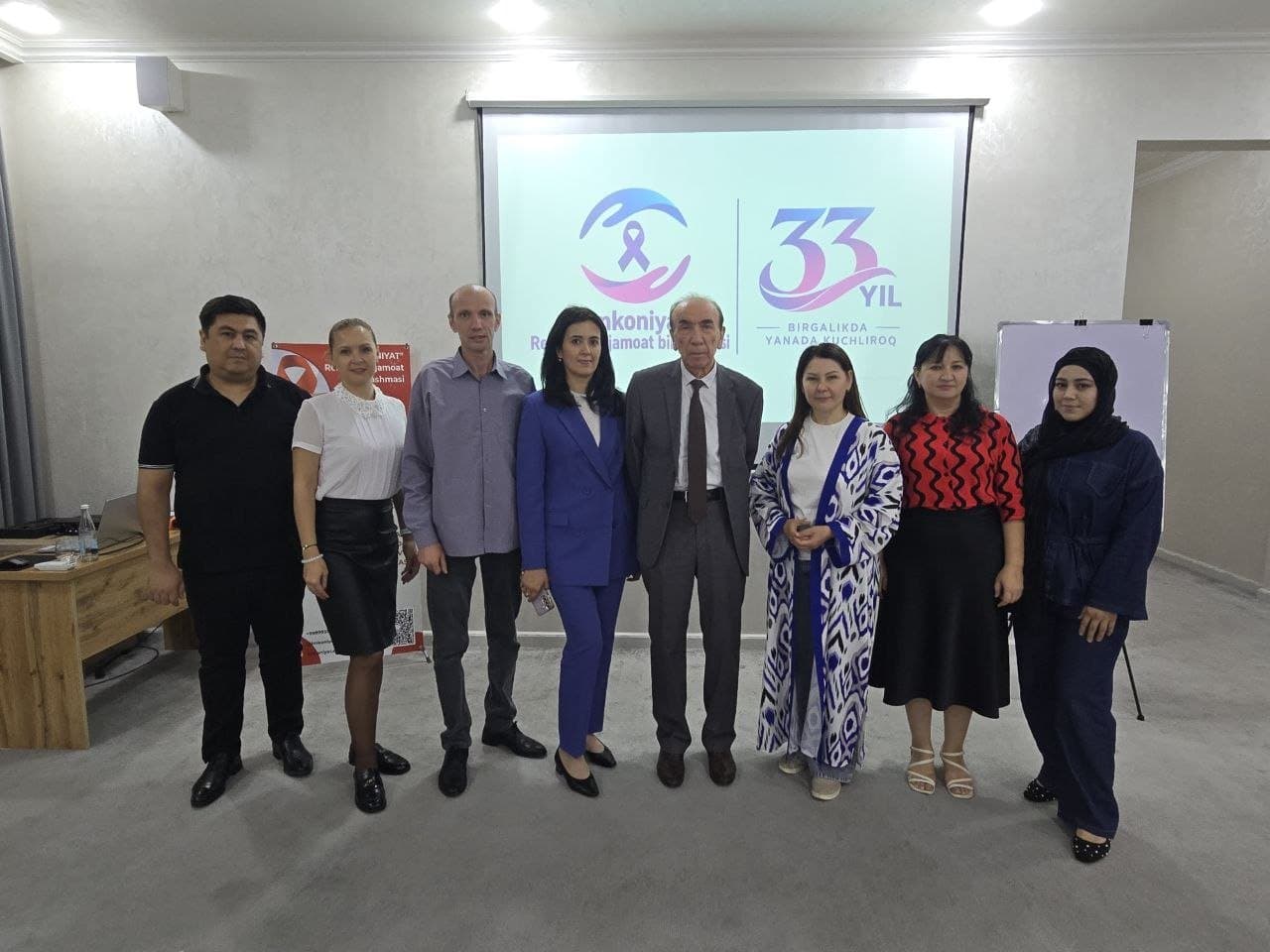
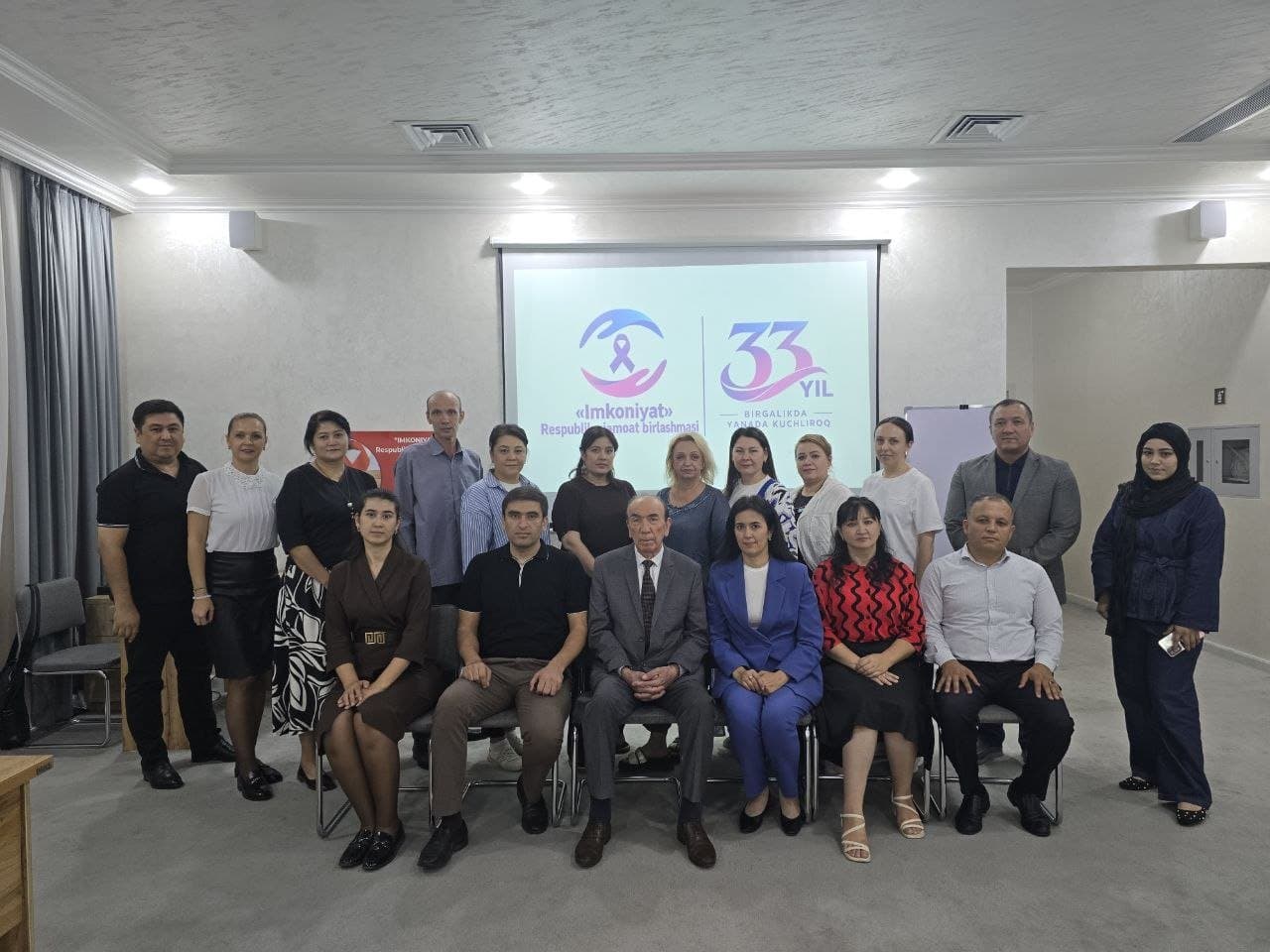
4.4. IMKONIYAT — 33 years: cooperation and new goals. At a round table marking the organisation’s 33rd anniversary, partners and colleagues discussed current projects, results, plans, social development, equal opportunities and quality of life. Participants included the Tashkent Regional AIDS Centre, Ishonch va Hayot NGO, Intilish NGO, the International Organization for Migration (IOM), Yuksalish, the Tashkent Region Youth Union, the regional Youth Affairs Agency, the regional Mahalla Association, Barqaror Hayot NGO, Istiqbolli avlod NGO, the Republican AIDS Centre, Tashkent City AIDS Centre, the Tashkent Region Health Department and the National Association of NGOs of Uzbekistan (NANAUZ). They discussed strengthening cooperation, new initiatives and future joint projects. Collective efforts represent a step towards new opportunities and positive change.
Institutional development
An important area in 2026 was developing IMKONIYAT’s institutional and professional capacity.
Organisational capacity assessment
In the first quarter of 2026, an organisational capacity assessment covered management systems, service quality, community work and cooperation.
Staff capacity building
In February, a three-day training on index testing and working with the partners of people living with HIV was held for healthcare and NGO specialists.
Project staff also attended ICAP and partner working meetings and training, increasing their knowledge of motivational counselling, person-centred approaches, preventing stigma and discrimination, and avoiding professional burnout.
Internal quality and service standards
The organisation strengthened the following principles:
- ensuring confidentiality;
- equal treatment of clients;
- preventing stigma and discrimination;
- person-centred services;
- protecting clients’ rights;
- handling enquiries and complaints;
- following professional and ethical standards.
Internal mechanisms were developed and improved to reinforce these principles.
Monitoring and coordination
Projects introduced regular monitoring, internal meetings, online meetings and results analysis.
16 online meetings were organised during the reporting period.
Sustainability and future directions
In 2026, partnerships, a qualified team, MDK activities, information and education mechanisms, and service delivery experience created an important institutional foundation for future work.
Future development is planned in these areas:
- expanding public access to HIV prevention and testing;
- improving MDK activities and bringing services closer to clients;
- engaging people living with HIV in ART and supporting treatment adherence;
- identifying and re-engaging clients lost to medical follow-up;
- continuing information, education and interactive youth projects;
- expanding community initiatives to reduce stigma and discrimination;
- strengthening cooperation with healthcare institutions, NGOs and civil society bodies;
- developing regional and national social projects;
- improving monitoring, data quality and results evaluation;
- strengthening long-term cooperation with donors and strategic partners.
Conclusion
From January to September 2026, IMKONIYAT implemented integrated activities supporting people living with HIV, delivering services to vulnerable groups, working with young people, and reducing stigma and discrimination.
SOMEC developed HIV prevention, testing, index testing, ART adherence and client re-engagement with medical follow-up in Samarkand region.
The project to achieve the 90‑90‑90 targets and strengthen STOP-TB developed HIV and tuberculosis prevention, targeted work with vulnerable groups, and access to medical and psychosocial services. Mobile multidisciplinary teams combined medical, psychological and social assistance, brought services closer to people living with HIV, and supported starting or restarting treatment and returning to medical follow-up.
The quiz project used interactive approaches to increase young people’s HIV knowledge and develop tolerance and non-discriminatory attitudes.
In 2026, cooperation expanded with government institutions, international organisations, NGOs, educational institutions and civil society. The new partnership with the Ecological Party of Uzbekistan, launched on 28 September, created opportunities for initiatives connecting healthcare, environmental awareness, healthy lifestyles and public participation.
In 2026, activities continued on the principles of bringing services closer to communities, strengthening a human rights-based approach, building professional capacity and developing cross-sector cooperation.
The 2026 reporting period’s experience and partnership network created a foundation for expanding HIV and tuberculosis prevention, support for vulnerable groups, youth work, and a healthy, inclusive society.